
7 Key Factors for Choosing the Right Water Storage Tank
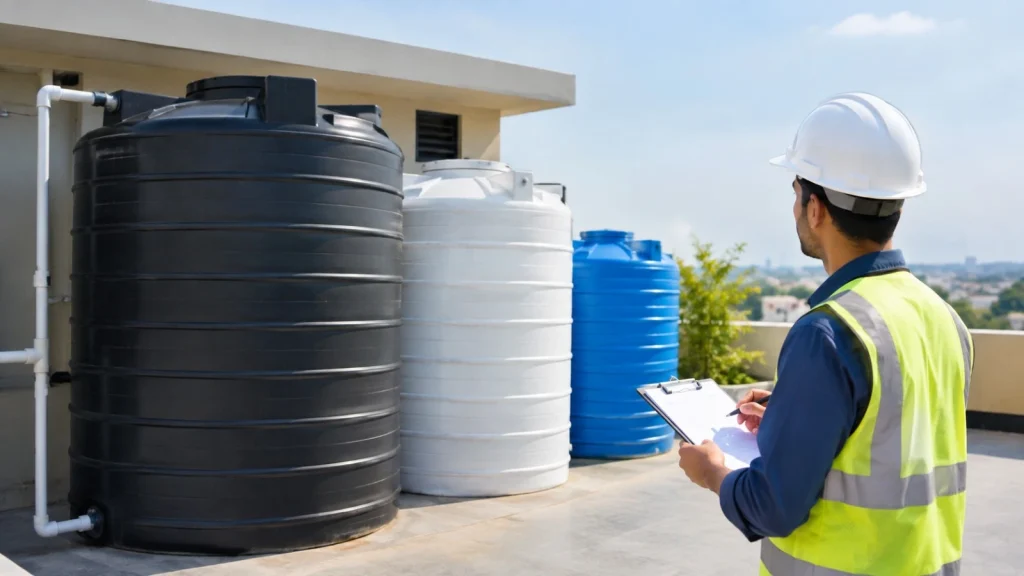
Picking a Water Storage Tank for a construction or development project is not just about choosing the right capacity. You also need to consider water demand, available space, installation conditions, material quality, and long-term use.
For builders, contractors, developers, and project managers, checking these factors before installation can prevent unnecessary changes and maintenance issues later. Here are seven factors to consider when selecting the right tank for your project.
1. Calculate the Required Water Storage Tank Capacity
First, determine how much water the project actually needs to store. The required Water Storage Tank Capacity depends on the number of people, type of building, daily consumption, existing water supply, and peak demand.
A residential project, commercial building, and industrial facility can have very different water requirements. Selecting capacity based on actual demand helps avoid installing a tank that is too small or taking up unnecessary space with an oversized tank.
2. Consider the Type of Water Storage Tank
Once the required capacity is established, select a tank type that suits the project. Water storage tanks are available in different designs and configurations to suit different site conditions.
Some projects may require above-ground tanks, while others may need underground storage or tanks positioned in a dedicated service area. The decision depends on the project layout, available space, installation conditions, access, and how water will be distributed.
Choosing the appropriate tank type during the planning stage can make Water Storage Tank Installation more practical and simplify future maintenance.
3. Check the Tank Material and Construction Quality
The material and construction quality of a Water Storage Tank can affect its service life and suitability for the project. The selected material should match the intended application and site conditions.
Builders should consider structural strength, resistance to weather conditions, expected service life, and suitability for long-term water storage.
A properly constructed tank can help reduce the risk of leakage, premature damage, and frequent replacement. Material quality should therefore be considered alongside capacity and design rather than as an afterthought.
4. Evaluate the Available Installation Space
Available site space should be checked before finalising the tank. This includes not only the area required for the tank itself but also sufficient room for installation, pipe connections, inspection, cleaning, and maintenance.
For projects with limited space, tank dimensions can become an important consideration. Underground installations also require proper planning for excavation, access, surrounding utilities, and structural requirements.
Careful planning of Water Storage Tank Installation can help prevent site complications after other construction work has already been completed.
5. Plan the Tank Location and Water Distribution
Tank location should be considered as part of the overall water supply plan. Its position can affect pipeline length, pumping requirements, water pressure, and how efficiently water reaches different parts of the project.
The location should therefore be planned around the building layout, plumbing lines, pumps, access requirements, and other infrastructure.
For larger developments, coordinating the tank with the complete water distribution network can make the system more practical and efficient. Proper planning also helps create Water Storage Solutions that suit the actual requirements of the project.
6. Consider Maintenance and Accessibility
Water tanks require regular inspection, cleaning, and maintenance. The installation should therefore provide suitable access for checking the tank, inspecting connections, cleaning internal areas, and addressing maintenance requirements.
A tank may meet all technical requirements, but poor accessibility can make routine maintenance difficult once the project is operational.
Builders and project teams should consider maintenance access before finalising the tank location and surrounding construction. This is especially important when developing Water Storage Solutions for larger commercial and infrastructure projects.
7. Plan for Future Water Requirements
Water requirements may change after a project becomes operational. A development could expand, occupancy could increase, or additional facilities could be introduced.
Planning only for current consumption may create storage limitations later. Where practical, the project should allow some scope for future demand without requiring major changes to the existing infrastructure.
Considering future requirements during the planning stage can make the selected Water Storage Tank more adaptable to changes in project usage.
Conclusion
Choosing the right Water Storage involves more than comparing available capacities. Water demand, tank type, material quality, installation space, location, distribution, maintenance access, and future requirements all need to be considered.
For builders, developers, contractors, and project managers, evaluating these factors in sequence provides a practical approach to tank selection before installation.
A properly planned storage system can support reliable water availability while fitting into the project’s wider infrastructure requirements. Selecting a suitable Water Tank for Construction Projects also helps ensure that the storage arrangement matches the project’s present and future needs.
Discuss your project requirements with Leenus India for reliable water storage solutions.
Frequently Asked questions (FAQ's)
Compare the required capacity, tank type, material, installation location, structural requirements, water demand, and project specifications before selecting a suitable water storage tank.
Compare tank capacity, material, wall thickness, structural strength, UV and weather resistance, fittings, dimensions, applicable standards, and installation requirements to identify the right option for your project.
Evaluate suppliers based on product specifications, manufacturing quality, available capacities, technical documentation, delivery capability, installation support, and their ability to meet project-specific requirements.
Leenus India supplies water storage solutions for layouts, construction, real estate and infrastructure requirements and can support projects based on their specific storage and site requirements.
