
Underground Drainage Installation for Hospitals, Hotels & IT Parks
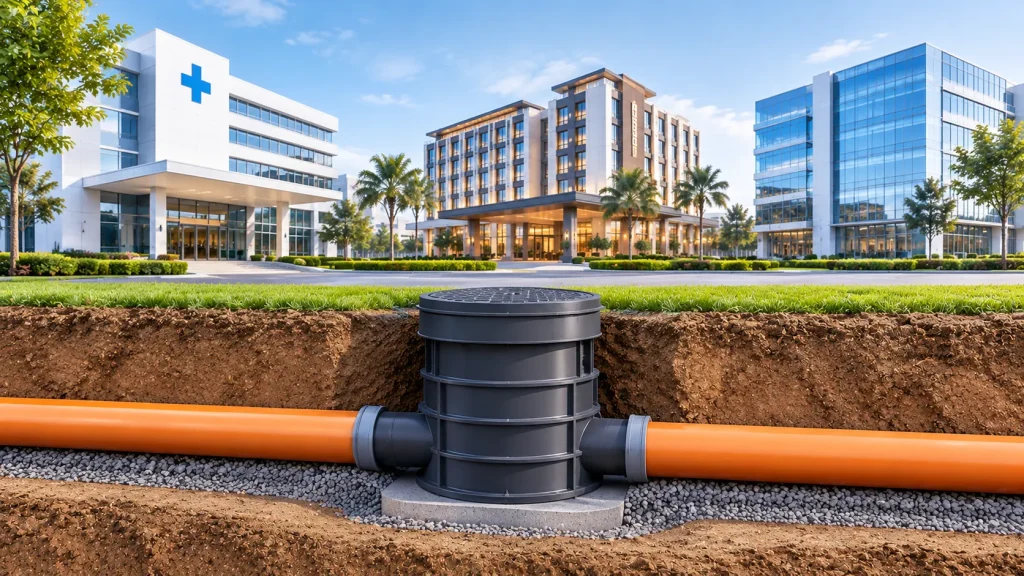
Think of how much water is used by a hospital, a hotel, or an IT park in one day. Washrooms, kitchens, laundries, cleaning, rainwater from car parks and roads – it all has to go somewhere. That is what the underground drainage system is for, and it is only noticed when it fails.
When drainage is badly planned, the signs are quick to show. Pipes are blocked by rain and parking lots are flooded, joints are leaking, and there is a bad smell around the building. Digging up buried pipes costs a lot. Causes a lot of trouble. Therefore, it is smart to get the drainage installation right from the beginning.
Why Underground Drainage Matters for Commercial Buildings
A good underground drainage system collects wastewater and takes it away safely. It keeps the sewage flowing to prevent blockages and stops leaks that could damage the soil under the foundation. Inspection chambers also allow maintenance teams to inspect and clean pipes without having to dig up the ground.
Miss one of these and you’ll turn little problems into big repair bills.
Underground drainage of different types of buildings
Hospital Basement Drainage:
Problem: Hospitals use a huge quantity of water every day. This creates various types of wastewater. Mixing medical wastewater with sewage can cause health issues.
Solution: Disconnect the medical wastewater line from the wastewater line. Use pipes that are resistant to chemicals and install them on a slope so that water can flow freely. Put inspection chambers in places where they are accessible for cleaning and troubleshooting
Hotels underground drainage
Problem: Water usage by guests in hotels. During weddings and events, the volume of wastewater going into the drainage system is higher on weekends. Kitchen grease can block pipes, and rainwater from parking areas needs to be drained.
Solution: Pipes are sized according to hotel water consumption. Grease traps. The grease traps are installed in the kitchen drains to keep the grease out of the pipes. Rainwater drainage should be separated from the sewage system to avoid flooding.
Underground drainage installation in IT Park
Problem: IT parks have buildings, roads, parking lots, and canteens. All these places generate wastewater & rain water, which needs to be drained. As the place gets bigger, the old drainage system should be able to handle the water.
Solution: All the buildings should have an underground drainage system connected. Have stormwater pipes to cope with rainwater from streets and parking lots. Inspection chambers should be provided for ease of maintenance. Ensure the drainage pipes are big enough to carry more water in the future.
How to choose the right underground drainage pipes?
The pipes are the heart of the entire system. Watch for:
Material: DWC pipes and ECO Drain pipes are commonly used for below-ground work. You could use another drainage pipe as well.
Diameter: Diameter should be in proportion to the expected volume of wastewater. The diameter must be sized to handle the flow the system will carry.
Strength: The strength depends on the soil and on what will be traveling in the pipe. Consider the stability of the soil and what will be moving through or over the pipe.
Long life: Durability is essential for use and longevity. The pipes need to be strong enough to last many years underground without failing.
Joints: Joints are very important. Check the jointing system carefully; good joints make for no leaks. A tight pipe needs good joints. Good joints keep water from leaking out of the pipe.
Both ECO & DWC Drain pipes are usually good for underground drainage and stormwater lines, but the final decision should be made as per your project specifications.
How to Install Underground Drainage – Step-by-Step Instructions
Site inspection: Inspect building layout, soil, and existing connections.
Drainage design: Design of pipe runs, size, fall, and position of chambers.
Trench Excavation: Excavate as indicated by the approved design.
Bedding: Build a solid base for uniform pipe support.
Pipe laying: Place pipes at the correct slope and alignment.
Jointing: Pipes should be joined tightly.
Testing: Check for leaks and flow before covering anything.
Backfilling: Only cover the pipes after inspection and approval.
How to choose a good underground drainage contractor in Hyderabad
The underground drainage contractor you choose will have an impact on how well your system performs for years. Ask some questions before you sign:
- Have they done commercial drainage work before?
- Are they going to check out the site and develop a proper plan first?
- What grade pipes and fittings will they be using?
- How do they carry out the installation and testing of the work?
- Later, will they help you with maintenance and inspection?
Ask to view completed projects of similar size. A good contractor will explain the plan in layman’s terms and won’t mind your questions.
Why Leenus India is best suited for Underground Drainage systems.
Leenus India is a Hyderabad-based company that offers various underground solutions, including underground drainage installation, storm water management, underground electrical lines, and civil works.
We have worked with 100+ hotels, hospitals, and IT park layouts with a 100% success rate in underground drainage installation and material supply.
Conclusion
Hospitals, hotels, and IT parks manage large amounts of wastewater every single day, and none of them can afford a drainage failure. A well‑designed underground drainage system keeps a building running, protects its foundation, and saves you from repairs.
If you are planning to have drainage for a hospital, hotel, or IT park, you can contact Leenus India Today to discuss your project requirements.
Frequently Asked questions (FAQ's)
Proper drainage of wastewater is needed in hotels and kitchens from bathrooms, kitchens, and laundry rooms. Install grease traps to prevent oil and food waste from clogging up pipes. Do not connect rainwater to sewage lines. These connections can cause flooding.
In IT parks, washroom and canteen wastewater is disposed of through underground pipes. Separate stormwater pipes carry rainwater away from roads, rooftops, and car parks. Inspection chambers are used for maintenance and cleaning.
Inspect underground drainage systems every 6-12 months. Regular checks will help you identify leaks, blockages, and damaged pipes before they become expensive repairs.
Hospitals produce more wastewater. Separate lines for wastewater and special medical wastewater should be maintained wherever necessary. The pipes should be suitable for hospital wastewater conditions. The system shall comply with local regulations for treatment and disposal of wastewater.
