
Choosing the Best Underground Drainage Pipes: Foam Core vs Eco Drain vs Concrete
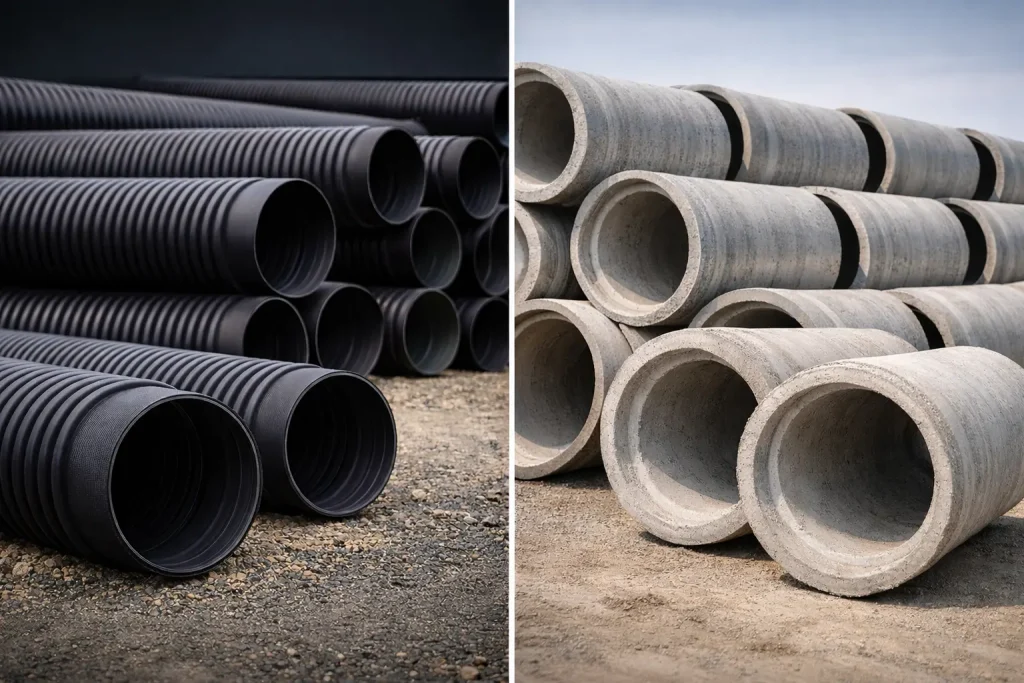
Across construction projects, one issue shows up again and again blocked lines, leaking joints, or unexpected rework after completion. In many cases, the root cause traces back to poor selection of underground drainage pipes.
In India, site conditions are rarely uniform. Soil stability, groundwater levels, and load-bearing requirements change from one project to another. That’s why selecting the right underground drainage pipe materials is not just a technical checkbox; it directly impacts project timelines, costs, and long-term performance.
This guide compares three widely used options: foam core, eco drain, and concrete to help you choose what actually works on-site, not just in theory.
Understanding Underground Drainage Pipes
What Are Underground Drainage Pipes?
Underground drainage pipes are designed to carry wastewater and stormwater away from buildings and infrastructure. In residential and commercial projects, they connect internal plumbing systems to external drainage networks. In large-scale developments, they form a critical part of underground drainage pipes for sewage systems.
However, even the best materials can fail if execution is poor. Improper underground drainage pipes installation often leads to leakage, blockages, and frequent maintenance issues within a few years.
What Project Teams Should Focus On
When evaluating different options, teams usually consider:
- Load-bearing strength under soil and traffic pressure
- Resistance to corrosion and chemicals
- Ease and speed of installation
- Compliance with IS standards
The right decision balances all these factors instead of focusing on just one.
Types of Underground Drainage Pipes
Foam Core Pipes
Foam core pipes are built using a layered PVC structure, featuring a solid outer layer and a foamed inner core.
Why they are widely used:
- Lightweight and easy to handle
- Faster alignment and jointing
- Smooth internal surface reduces clogging
- Lower transport and labour costs
Best suited for:
- Residential developments
- Commercial buildings
- Mid-rise structures with moderate loads
For projects with tight deadlines, foam core is a practical choice among the types of underground drainage pipes, helping teams complete work faster without compromising performance.
Learn more about: Foam core pipes Advantages
Eco Drain Pipes
Eco drain pipes are engineered for durability and environmental performance. They are becoming increasingly popular in projects where long-term reliability is critical.
Key advantages:
- High resistance to chemicals and wastewater
- Longer service life with minimal wear
- Suitable for green-certified projects
Typical applications:
- Industrial drainage systems
- Large-scale sewage infrastructure
- Smart city developments
They are especially effective in demanding environments where standard underground drainage pipes for buildings may fail over time.
Learn how: Eco drain pipes help us reduce drainage failures
Concrete Pipes
Concrete pipes have been a traditional choice in drainage systems, particularly in infrastructure projects.
Where they perform best:
- High-load areas such as highways
- Deep underground installations
- Large-diameter sewage lines
Challenges on site:
- Require heavy equipment for handling
- Slower installation process
- Vulnerable to corrosion in certain environments
Today, many project teams evaluate alternatives before selecting concrete, especially when speed and lifecycle cost are key concerns.
Foam Core vs Eco Drain vs Concrete
Here’s how these materials compare in real-world conditions:
- Handling: Foam core and eco drain are easy to manage, while concrete requires machinery
- Installation Speed: Foam core and eco drain offer faster installation; concrete is slower
- Durability: Eco drain performs the best, followed by foam core, while concrete varies by condition
- Maintenance: Eco drain requires minimal maintenance, foam core is low, and concrete can increase costs over time
- Cost Impact: Foam core has lower upfront costs, eco drain offers balanced value, and concrete often leads to higher overall costs
What Most Teams Choose
- Foam core for speed and cost efficiency
- Eco drain for durability and compliance
- Concrete for heavy-load infrastructure
If the choice isn’t obvious, it usually means the project has mixed requirements that need deeper evaluation.
Key Factors Before Finalising Pipes
1. Project Type
Different projects demand different solutions:
- Buildings require easy-to-install systems
- Sewage networks need durability
- Industrial sites demand chemical resistance
2. Site Conditions
Ignoring site realities often leads to early failure:
- High groundwater levels can affect joints
- Industrial discharge can damage standard materials
Proper assessment ensures the selected underground drainage pipe materials perform as expected.
3. Installation Constraints
Labour availability and equipment access directly impact execution. Lightweight options simplify installation and reduce dependency on machinery.
4. Lifecycle Costs
While upfront cost is important, long-term expenses matter more:
- Frequent repairs increase operational costs
- Durable systems reduce maintenance over time
A smart decision considers both immediate and future costs.
Underground Drainage Pipe Fittings & Installation
Essential Fittings
A drainage system is only as strong as its connections. Common underground drainage pipe fittings include:
- Couplers
- Bends
- Junctions
- Inspection chambers
Poor-quality fittings are one of the most common causes of leakage.
Installation Practices That Work
Successful underground drainage pipes installation typically includes:
- Proper trench preparation with stable bedding
- Maintaining correct slope for gravity flow
- Secure jointing and sealing
- Testing before backfilling
Following these steps ensures long-term system reliability.
Why Projects Are Moving Toward Advanced Solutions
Across the industry, there is a clear shift toward modern piping solutions. Project teams now prefer materials that reduce execution risks and improve efficiency.
- Faster installation helps meet deadlines
- Consistent quality reduces rework
- Lower maintenance improves lifecycle value
This shift is especially important for underground drainage pipes for buildings and underground drainage pipes for sewage systems, where failures directly impact daily operations.
Conclusion
Choosing the right underground drainage system is not just about selecting a material it’s about matching the solution to real site conditions.
Foam core pipes are ideal for projects that require speed and cost control. Eco drain pipes offer superior durability and long-term performance. Concrete pipes still play a role in heavy-load applications but are no longer the default choice.
The best decision depends on how these factors align with your project needs. Evaluating site conditions, installation constraints, and lifecycle costs ensures better outcomes.
Need help with underground drainage pipes installation? Talk to Leenus India experts.
Frequently Asked questions (FAQ's)
Yes, they are primarily used in sewage and wastewater systems to ensure smooth and safe waste flow in residential and commercial projects.
Foam core is ideal for residential use, eco drain suits long-term and industrial applications, while concrete is best for heavy-load environments.
Common materials include uPVC, foam core polymer, eco drain structured materials, and concrete.
Yes, they are still used in infrastructure projects, but many developers now prefer advanced materials for easier installation and better durability.
