
Expert Guide to Best Plumbing Products for Construction Projects in Hyderabad
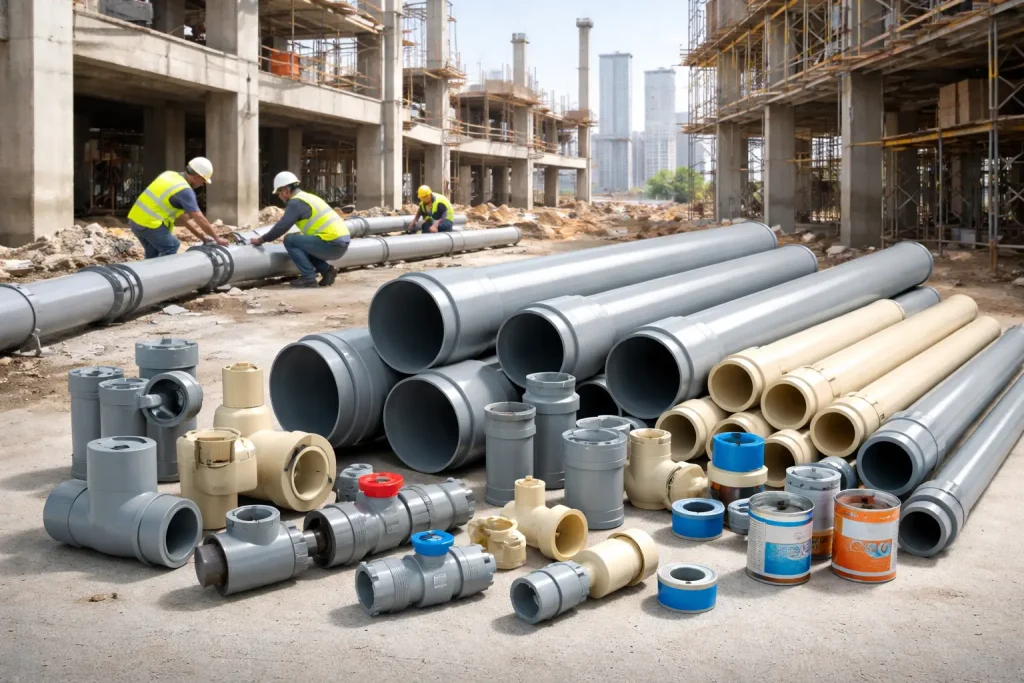
Spend enough time on construction sites and you learn something quickly; most building problems don’t come from the things people see. They come from the things hidden inside walls and underground.
Plumbing is one of them.
I’ve worked around piping and infrastructure projects long enough to see the same mistake repeated. A developer invests heavily in structure, facade and finishing. But the plumbing products are selected late in the project, sometimes based only on price or quick availability.
That works for a while. Then three or four years later the complaints start. A pipe joint leaks. Water pressure drops on upper floors. Maintenance teams start opening walls.
It’s avoidable. But only if the plumbing system is planned properly from the start.
With construction expanding quickly in Hyderabad, many developers and MEP teams are paying closer attention to the plumbing materials used inside their projects.
What Construction Projects Really Demand From Plumbing Pipes
An underground drainage system is a network of pipes installed below the ground that safely carries wastewater, sewage, and stormwater away from buildings and infrastructure. These systems are essential for:
- Residential layouts and gated communities
- Commercial and industrial buildings
- Government infrastructure projects
- Municipal sewage networks
- Real estate developments
For developers and contractors, a properly designed underground drainage system installation in India ensures smooth wastewater flow while preventing blockages, leakage, and corrosion.
Why Modern Buildings Require Advanced Drainage Networks
Plumbing design on paper always looks neat. Straight lines. Clean layouts. Perfect slopes.
Reality is different.
On site you deal with pressure fluctuations, temperature variations, installation constraints, and sometimes tight shafts that were never meant to carry so many services.
Because of this, the best pipes for plumbing systems aren’t just the ones with good specifications on a brochure. They are the ones that survive real conditions.
Things contractors usually look for include:
- consistent pressure handling
- reliable jointing methods
- resistance to corrosion and scaling
- predictable long-term performance
A pipe may look fine on installation day. The real test comes years later when the building is fully occupied.
Understanding the Different Plumbing Pipe Materials
Every construction project uses a mix of plumbing pipe materials. Choosing the right one depends on the building type, water system design, and long-term maintenance expectations.
PVC Pipes
PVC pipes are widely used in many plumbing networks. They’re lightweight, easy to transport, and installation crews are familiar with them.
In residential projects, PVC is commonly used for internal water supply lines and drainage connections. It performs well when the water temperature remains within normal limits.
But PVC has its limits. In projects where hot water systems are involved, contractors usually look at other options.
That’s where the PVC vs CPVC plumbing pipes discussion starts.
CPVC Pipes
CPVC pipes handle higher temperatures compared to PVC. That makes them suitable for hot and cold water supply lines inside buildings.
Many high-rise residential towers and hotels use CPVC for this reason.
But installation quality matters. I’ve seen projects where improper solvent cementing caused failures later. The pipe material was fine. The installation wasn’t.
That’s a good reminder even the best plumbing pipes for water supply won’t perform well if the installation team cuts corners.
Other Plumbing Materials Used in Large Projects
For bigger developments like townships or commercial complexes, contractors sometimes explore additional plumbing pipe materials for construction.
These may include:
- HDPE systems for large water distribution lines.
- specialized polymer pipes for long service life.
- structured wall pipes for drainage networks.
Each material has its place depending on the application.
The important thing is matching the pipe type with the building’s plumbing design rather than forcing one product everywhere.
What Experience on Construction Sites Teaches
Some lessons don’t come from manuals. They come from job sites.
One common issue I’ve seen in apartment projects is water pressure imbalance between lower and upper floors. When the plumbing design doesn’t account for pressure variation, the pipes closer to pump lines take more stress.
Over time, those sections wear faster.
Another situation appears in large residential communities. Long horizontal pipe runs sometimes develop minor sagging if they’re not supported properly during installation. That small installation detail can affect water flow later.
These are small things, but they matter.
Good plumbing planning isn’t just about choosing pipe material. It’s about understanding how the system behaves after the building is occupied.
Plumbing Systems in Fast-Growing Cities
Construction activity in cities like Hyderabad, Bengaluru, and Visakhapatnam has changed the way plumbing systems are designed.
Modern projects now involve:
- multi-tower residential complexes
- commercial office buildings
- large gated communities
- mixed-use developments
These projects require plumbing networks that can support heavy daily usage across hundreds of units.
That’s why developers are paying more attention to the types of plumbing pipes for homes and commercial buildings used inside their projects.
The cost difference between average pipes and high-quality pipes during construction is often small. But the long-term performance difference can be significant.
One Final Thought From the Field
Good plumbing decisions made during construction save years of maintenance and repair work later. For builders and MEP teams working in Hyderabad, choosing the right plumbing products early helps ensure smooth water flow, stable pressure, and long-term reliability in every project.
If you are planning a construction project and want to choose the right plumbing pipes, you can explore the available solutions with Leenus India
Or connect with the Leenus India team to discuss your project requirements and get the right plumbing materials for your construction work.
Frequently Asked questions (FAQ's)
Builders in Hyderabad commonly use PVC and CPVC pipes from trusted brands like Supreme Industries for durability and long-term performance.
PVC pipes are good for general water supply and drainage, while CPVC pipes are better for hot and cold water systems.
PVC is used for cold water and drainage. CPVC can handle both hot and cold water due to higher heat resistance.
Consider water pressure, building type, and usage. Always choose pipes that last long and need less maintenance.
