
Underground Electrical Networks for Layout Development in Hyderabad
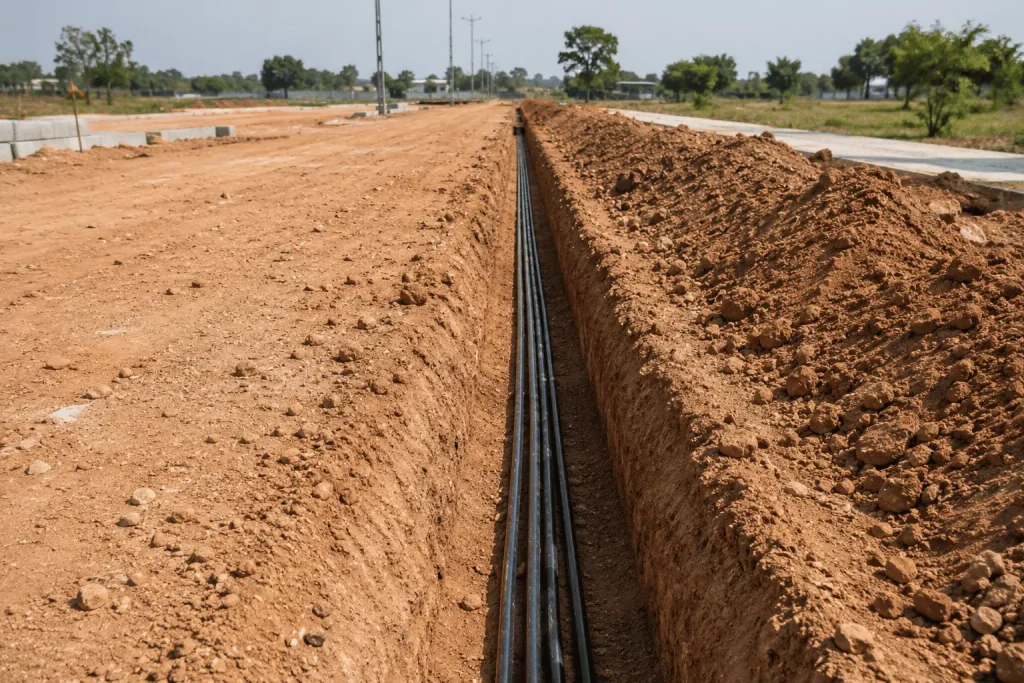
Most builders in Hyderabad spend months planning road widths, plot sizes, and amenities. But when it comes to underground electrical networks, they leave it to the last minute or worse, hand it to whoever is available at the time.
That decision creates problems that show up after the layout is sold.
Tripped breakers on the day of handover. Cable ducts that run directly through drainage lines. Roads that need to be cut open three months after completion just to fix an electrical fault. These are not unlucky accidents. They are the predictable result of poor electrical planning in a layout project.
If you are a builder or MEP developer planning a layout in Hyderabad, this blog will tell you exactly what needs to happen and when so your electrical infrastructure is built correctly the first time.
Why Underground Electrical Networks Need to Be Planned First - Not Last
Here is the mistake that costs builders the most money during layout development.
Drainage is planned. Water supply is planned. Roads are designed. And then, right before the plots are ready to hand over, someone asks what about the electrical?
By that point, all the trenches are closed. The road base is laid. And now you have to dig everything open again just to lay the electrical ducts.
Underground electrical cable installation needs to happen in the same trench-opening phase as drainage and water supply. Not after. Not separately. The moment you coordinate all three utilities together, you save the cost of three separate trench operations which on a 10-acre layout can easily run into 20 to 30 lakhs in unnecessary extra work.
The builders who avoid this problem are the ones who plan their underground electrical networks before the first machine enters the site.
What Laying Electric Cable Underground in a Layout Actually Involves
A lot of developers think underground electrical work is simply about buying cable and burying it. It is not.
Laying electric cable underground in a layout involves a proper engineering sequence:
Route design. Every cable run needs to be designed on the layout map before digging starts. The routes need to avoid drainage lines, water supply pipes, and tree zones. They need to follow road alignments so future maintenance does not require cutting through private plots.
Duct selection. The cable does not go directly into the ground. It goes inside a protective duct, usually HDPE or rigid PVC that allows the cable to be pulled out and replaced in the future without any digging. Skipping ducts means every future repair requires breaking open the road.
Depth compliance. Underground electrical cables need to be buried at the correct depth — typically 750mm to 1000mm depending on the voltage level. Cables buried too shallow get damaged by regular construction activity on site. Too deep makes future maintenance difficult.
Junction box placement. Every change of direction, every branch point, and every connection in the underground network needs a properly installed junction or feeder pillar box. These are the access points for maintenance. A layout without them is a layout that cannot be serviced without digging.
Testing before backfilling. Once the cables and ducts are laid, the entire run needs to be tested for continuity and insulation resistance before the trench is closed. Finding a fault after the road is built means breaking the road to fix it.
How to Choose the Right Underground Electrical Contractors for Your Layout
Choosing underground electrical contractors is not the same as hiring a general electrician. Layout-level electrical work requires contractors who have done this at scale with proper drawings, compliance documentation, and testing protocols.
Before you hire, ask these three questions:
Have they worked on layout projects of your size? A contractor experienced with apartments may have no experience with the open-ground trench work a layout requires. Ask for specific project references at a similar scale.
Do they coordinate with the drainage and civil team? The best underground electrical contractors understand that their work does not happen in isolation. They plan their duct runs around drainage lines, not over them. If a contractor cannot show you how they coordinate with the civil scope, that is a red flag.
Do they provide as-built drawings after completion? Once the electrical ducts and cables are underground and the road is built on top, nobody will remember exactly where every cable runs. Without an as-built drawing, your layout is a black box. Any fault or future extension becomes a guessing game. Always insist on documentation at handover.
What Leenus India Does Differently for Underground Electrical Networks
Leenus India handles underground electrical networks as part of a fully integrated layout development scope alongside drainage systems, water supply lines, and road formation. Everything is planned together, executed in the right sequence, and documented for handover.
Our team has delivered electrical infrastructure for layout projects across Hyderabad and Telangana from small residential layouts to large township projects. We are authorised distributors of Supreme Industries and bring tested, IS-certified materials to every project we handle.
When underground electrical cable installation, drainage, and water supply are all managed by one team, you get one trench, one plan, zero coordination gaps, and a layout that is ready to hand over without surprises.
Talk to Our Team Before You Start
If you are planning a layout in Hyderabad and have not finalised your underground electrical network yet, speak with Leenus India before you begin any digging.
We will review your layout plan, design the electrical and utility scope together, and give you a complete, transparent quote free of charge.
Contact us Today for a free site survey
Frequently Asked questions (FAQ's)
Underground electrical cable installation improves safety, reduces visual clutter, protects cables from weather-related damage, and provides a more reliable power distribution system compared to overhead electrical lines.
Underground electrical networks should be planned and installed alongside drainage and water supply infrastructure before road construction begins. This avoids costly rework and prevents future utility conflicts.
Underground electrical contractors design cable routes based on approved layout drawings, road alignments, utility corridors, drainage systems, and future maintenance requirements. Proper planning helps avoid clashes with other underground utilities.
A professional contractor should provide as-built drawings, cable route plans, testing reports, inspection records, and material specifications. These documents help with future maintenance and infrastructure upgrades.
