
Overhead vs Underground Electrical Networks - Real Cost Comparison for Layout Developers
If you are developing a residential layout in Hyderabad or anywhere in Telangana, one of the earliest decisions you will face is this: should you go with overhead electrical lines or underground electrical networks?
Both options will power your layout. But the cost, long-term maintenance, buyer perception, and approval requirements are completely different between the two.
Most developers ask about upfront costs and stop there. That is the wrong approach. The real comparison is total cost over the life of your project and when you look at it that way, the answer becomes much clearer.
What Are Overhead Electrical Lines?
Overhead electrical lines are the traditional system where cables are strung on concrete or steel poles erected along road margins, running from pole to pole and connecting to individual plot service connections.
This has been the standard method in Indian layouts for decades primarily because it is faster to install and cheaper upfront.
What Are Underground Electrical Networks?
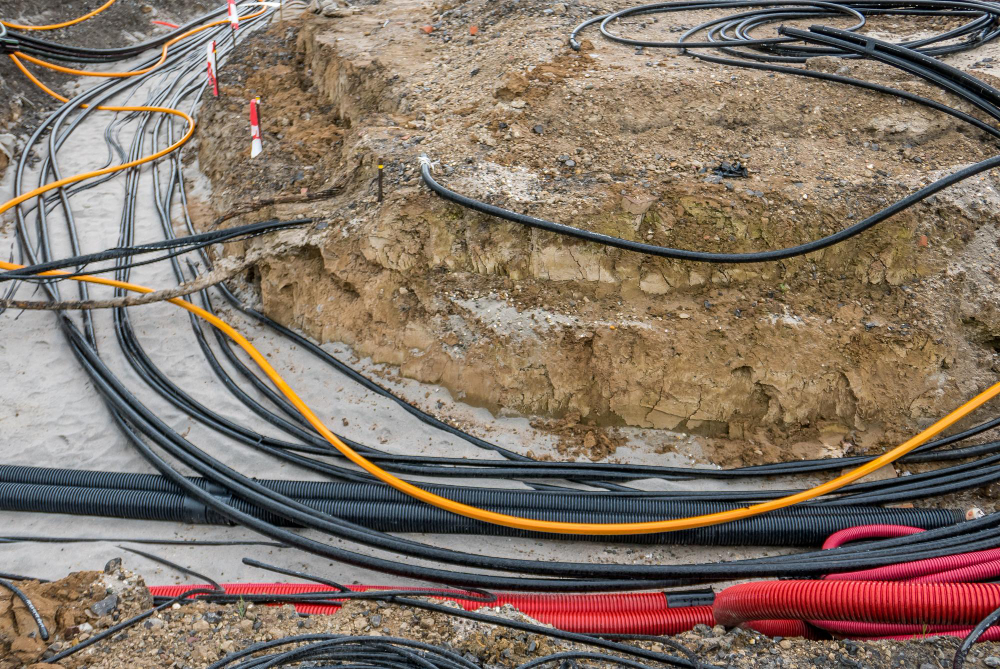
Underground electrical networks mean all cables are laid inside protective conduit pipes buried in trenches below the road surface. The entire electrical system from the main transformer to individual plot connections runs underground with no visible poles or cables above ground.
Underground electrical cable installation is now the preferred standard for any layout that wants modern infrastructure, buyer trust, and smooth approvals.
The Upfront Cost - Overhead vs Underground
Overhead electrical lines are cheaper to install initially. For a medium-size residential layout of around 100 plots, here is the honest comparison:
Overhead Electrical System: Poles, cables, hardware, and labour typically cost ₹8 to ₹12 lakhs depending on pole spacing, cable length, and load requirement.
Underground Electrical Networks: The same layout with underground electrical cable installation including HDPE conduit, armoured cables, trench digging, backfilling, and testing typically costs ₹18 to ₹28 lakhs.
So yes, underground electrical networks cost roughly 1.5 to 2.5 times more upfront. That is the honest number. But that is where the overhead cost advantage ends.
The Long-Term Cost - Where Overhead Lines Start Losing
Maintenance and Repair Costs
Overhead electrical lines require regular maintenance pole painting, insulator checks, cable sag corrections, and storm damage repair. Every heavy rain season in Hyderabad, overhead lines in layouts suffer damage. These recurring costs fall on the developer or the residents’ welfare association.
Underground electrical networks need virtually zero maintenance for 25 to 30 years. The cables are armoured, protected inside conduits, and completely isolated from weather. The savings from laying electric cable underground properly from the start are substantial over the lifetime of the project.
Power Outage Frequency
Overhead lines go down during storms and heavy wind. Every outage damages your reputation as a developer. Underground electrical networks are completely weather-proof; outages from overhead faults simply do not happen with a properly installed underground system.
Plot Value Impact
Layouts with underground electrical networks command higher plot prices and sell faster. A conservative estimate from experienced layout developers in Telangana is that underground electrical networks add 5 to 8 percent to plot value perception. On a 100-plot layout averaging ₹20 lakhs per plot, the additional cost of underground electrical cable installation is recovered many times over through better pricing and faster sales.
The Approval Reality in 2025
HMDA and DTCP now require underground electrical networks as part of layout approval conditions for most new applications in Telangana. The BuildNow portal, which replaced TGbPASS in late 2025, reflects this clearly.
Developers who try to cut costs with overhead lines and plan to convert later end up spending more retrofitting underground electrical cable installation after roads and plots are developed costs 40 to 60 percent more than doing it during the initial infrastructure phase.
When Do Overhead Lines Still Make Sense?
For very small ventures under 20 plots in rural areas outside HMDA limits, overhead lines may still be acceptable. For temporary site power during construction, they remain standard practice.
But for any layout targeting the Hyderabad market Shamshabad, Yadadri, Pharma City corridor, ORR zones overhead lines are no longer a competitive or compliant option.
Work With Underground Electrical Contractors Who Have Done This Before
Underground electrical cable installation for layout projects requires proper load calculations, conduit sizing, trench coordination with drainage and water lines, DISCOM approvals, and testing before commissioning. Underground electrical contractors without layout-specific experience will cut corners or cause delays during DISCOM inspection.
Leenus India has executed underground electrical networks for residential layouts across Hyderabad and Telangana. We manage everything from survey and design to laying electric cable underground, DISCOM coordination, and handover.
Contact Leenus India for a free site visit and detailed quotation for your underground electrical network today.
Frequently Asked questions (FAQ's)
Yes, underground electrical networks cost more upfront: ₹18 to ₹28 lakhs for a 100-plot layout versus ₹8 to ₹12 lakhs for overhead lines. However, near-zero maintenance costs and better plot pricing make them more cost-effective over the full project lifetime.
Yes. HMDA and DTCP now require underground electrical networks as part of layout approval conditions in Telangana. Layouts submitted through the BuildNow portal must comply. Overhead lines are not accepted for new residential layout approvals under HMDA and DTCP jurisdictions.
For a standard residential layout in Hyderabad, underground electrical cable installation costs roughly ₹18,000 to ₹28,000 per plot including HDPE conduit, armoured cable, trenching, backfilling, and DISCOM coordination for the complete underground electrical network.
Yes, but it costs 40 to 60 percent more after roads and plots are developed. Laying electric cable underground during the initial infrastructure phase is always significantly cheaper and less disruptive than retrofitting later.
